
Jeff Kupfer (University of Colorado-Denver) & Ron Allen (Simmons University)
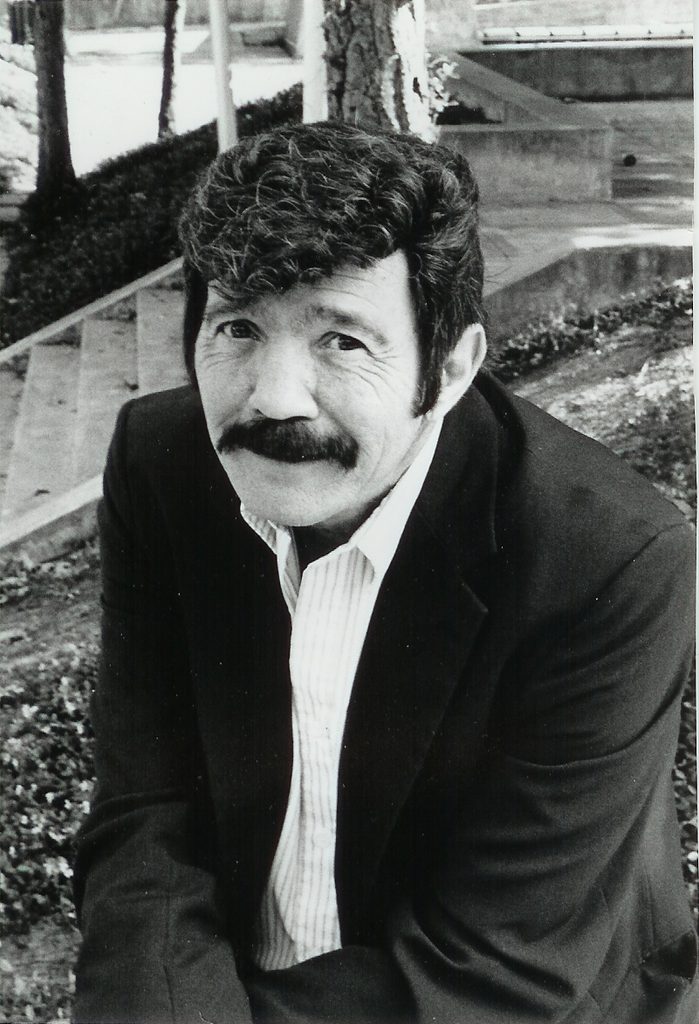
Welcome to the ABAI Cultural Evolution and Analysis! As we said in our first blog, there are many places to begin our dive into this important topic. For us as former students at the University of Florida, we would be remiss if we did not start with our major advisor: E.F. Malagodi. It is not an overstatement to say that Ed influenced every graduate student the passed through the program, and the rest of the faculty— The Gator Operant Contingent.
In his call for cultural analysis in 1986, Malagodi suggests that the full potential of a science of behavior has not been realized because of a failure of behavior analysts to include social and cultural analysis as part of radical behaviorism. Rather, he suggests that “Radical behaviorism and its allied science and technology have been applied, when at all, mostly to bind a few of the minor wounds inflicted upon individual victims of a badly designed culture” (pg. 2). Sadly, we continue to contribute little to the understanding of cultural and social problems.
Our long history of failure of can be linked to three oversights: (1) constraining the definition of radical behaviorism as simply a philosophy of behavior; (2) relying on the principles from experimental analysis for interpreting social/cultural event; and (3) failing to recognize relationships that do or should exist between radical behaviorism and related sciences. What evolved was an overemphasis of one aspect, albeit important: an epistemology of private evens, causation, and scientific explanation. Malagodi suggests the necessary solution begins by expanding the definition to include epistemology as one part of a broader category. In fact, Malagodi cites the term “radical” may have been used by Skinner in 1945 partially because of the metaphor Roots, origins, thorough-going, extreme, drastic political, economic or social reforms
Although Malagodi points out an early misleading trend by behavior analysts of leaning into experimental and applied behavior analysis to generate answers to questions based on a few facts and principles, at best they were only similarities or vague theoretical extensions. What was the delay in addressing more pressing cultural problems? He suggest: (1) early behaviorists never took the social sciences seriously because they were too busy getting their own house in order: (2) there were too many constraints of psychology department and competition between various areas within psychology; (3) we directed more attention to biological and animal sciences and less attention to the social sciences; and (4) we have (and continue) to experience rapid expansion of behavior analysis and time allocated to development of subject matter in general rather than to explore other scientific kinship relations.
Malagodi suggests that there are examples of other sciences that have experienced parallel development. For example, biological evolutionary theory and radical behaviorism are both concerned with the mechanisms of selection. Both went through a rough development and conflicts with pre-scientific views. Finally, biological evolutionary theory has benefitted from appreciation of other effective disciplines (paleontology, physical anthropology, ecology, climatology, natural history, geology).
A similar trajectory between cultural evolution theory and radical behaviorism can be drawn, thus expanding the understanding of the individual with a molar analysis of cultural practices. Malagodi identifies Cultural Materialism and the writing of Marvin Harris as a starting point because of its compatibility with radical behaviorism. Consider the following similarities:
- Both view selection by consequence as the major determinant of genes, behavior and culture
- Infrastructural contingencies (see below) are compatible with contingencies of unconditioned and conditioned reinforcement
- Both treat the individual as the fundamental locus of selective action
- Principles of selection is compatible with Law of Effect
- Both treat consciousness as a product, not a cause of social processes
- Both focus on environmental contingencies giving rise to rule derivation
- Both are critical of alternative theories and strategies (sociobiology, structuralism, eclecticism, and anything cognitive)
- Both address important issues of ethics and cultural survival
Malagodi provides a brief overview of Harris’ view of the three mechanisms of cultural selection. Infrastructure refers to those technologies and practices concerned with modes of production and practices for expanding, limiting, or maintaining population size (modes of reproduction). Structure refers to domestic and political economics, family structure, education, and political organizations. Superstructure describes those social activities and their products such as art, music, theatre, rituals, games, philosophy, and science (all sciences, including EAB, ABA, radical behaviorism, and so on). The effects of variables in structural and superstructural are best predicted on the basis to which they are in harmony or conflict with existing contingencies in modes of reproduction and production. This is a theme that I will be bringing back in future blogs.
Several suggestions are offered by Malagodi— perhaps his best guesses in 1986; however, some of his questions remain relevant such as: Who is our audience? What is in vogue? Who are we really helping? Are we simply developing behavior technology to be usurped by ceremonial cultural practices? (See Glenn, 1986). Malagodi offers the following recommendations and, indeed he introduced these changes at the EAB department at the University of Florida: (1) removal of arbitrary boundaries and barriers that prevent more interdisciplinary activities; (2) read and publish outside of our mainstream; (3) develop functional alliances with representative of the social science with whom we share compatible views (method, epistemology, theory); and (4) expanding educational content for degrees. I would add one more: requirement 3 CEUs for BCBAs for “cultural analysis/allied science education” for each renewal.
Forty years later, Malagodi’s article resonates today as it did when it was published. Although he may have been hasty to dismiss some important contributions by research (e.g., schedules of reinforcement, adjunctive behavior, conditioned reinforcement, generalized matching law, errorless discrimination, stimulus equivalence, behavioral momentum, behavioral economics and discounting, and so on), Ed opened the door for many behavior analysts to the third level of selection to which Skinner pointed, and to a molar direction and the variations that we need today for survival.
References
Glenn S.S. (1985). Some reciprocal roles between behavior analysis and institutional economics in post-Darwinian science. The Behavior Analyst, 8 (1):15-27. doi: 10.1007/BF03391909. PMID: 22478617; PMCID: PMC2741765.
Harris, M. (1980). Cultural materialism: The struggle for a science of culture. New York: Random House.
Malagodi, E. F. (1986). On radicalizing behaviorism: A call for cultural analysis. The Behavior Analyst, 9, 1–17. https://doi.org/10.1007/BF03391925