
Fascinating, Horrifying, Essential: Teaching the History of Behavior Analysis
In this blog I highlight and comment on practical guidelines crafted by behavior analysts, for integrating history of behavior analysis into coursework.
Contemporary analyses of both the use of behavior analysis in educational settings and the teaching of behavior analysis.

In this blog I highlight and comment on practical guidelines crafted by behavior analysts, for integrating history of behavior analysis into coursework.

This blog highlights two observations, written as field notes, from recent sessions using the shaping game and PORTL. A lot happened in each class, but these two moments stood out. Interestingly, they weren’t part of the plan.

In May 2025, a group of behavior analysts who see themselves as teacher-scholars came together for a panel on the Scholarship of Teaching and Learning (SoTL) and its connections with behavior analysis.

My journey understanding burnout is certainly shorter than my journey experiencing it. Burnout in teachers of behavior analysis is underrepresented in the behavior-analytic literature, but here are useful resources from colleagues, particularly women, in other fields.
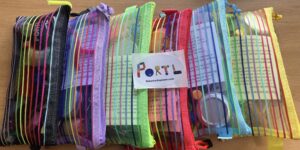
In a previous blog, I wrote about getting ready to use PORTL (Portable Operant Research and Teaching Lab) in the classroom for the first time. I was deep in prep—reading, chatting with colleagues, watching videos—and knew practice would follow. This spring, I finally went for it and used PORTL in two courses and here I share some takeaways and insigts.
Portable Operant Research and Teaching Lab (PORTL) manual and an educational kits. Photo by Mirari Elcoro.

One central aspect of becoming an informed consumer of science or scientist-practitioner is developing analytical skills. These analytical skills are problem-solving skills related to understanding data; practitioners must be able …

Among behavioral educators, the topic of similarities between behavior analytic pedagogies and Universal Design for Learning is gaining interest.

Learn to use blogs as a teaching and learning tools for students and teachers of behavior analysis.

5 We don’t often discuss failure. We’re not supposed to fail, and we pretend that we don’t fail even when it may take multiple attempts to succeed at a task. …