
Invited Blog Post Authored by Aida Tariga Rodriguez, PhD, BCBA-D, QBA, SLP
Dr. Aida Tarifa-Rodríguez is an Assistant Professor of Applied Behavior Analysis at Abu Dhabi University and Director of Student Services for the ABA master’s program in Spain. She is a Board Certified Behavior Analyst-Doctoral and a speech-language pathologist with over 20 years of experience in hospital, clinical, educational, and research settings, where she has integrated behavior analysis and speech-language therapy to improve communication outcomes.
Her work focuses on language acquisition and functional communication in individuals with autism, intellectual disabilities, and acquired brain injury. Dr. Tarifa-Rodríguez has published in journals such as the Journal of Applied Behavior Analysis, the Journal of Behavioral Education, and the European Journal of Neurology. She led the Spanish editions of the Verbal Behavior Milestones Assessment and Placement Program (Sundberg, 2008) and The Verbal Behavior Approach (Barbera & Rasmussen, 2007), and she is the author of Nala and Her Behavior Analyst: Finding My Voice, a children’s book that introduces behavior analysis through storytelling. She is committed to bridging research and clinical practice and to disseminating evidence-based practice in the Spanish-speaking behavior-analytic community.
Aphasia is a disorder that predominantly affects language as a result of stroke, traumatic brain injury, or neurodegenerative diseases. It impairs the production and comprehension of both spoken and written language and frequently co-occurs with other sequelae, such as dysphagia (American Speech-Language-Hearing Association, n.d.). The World Stroke Organization (2022) reports that more than 12 million people experience a stroke each year, and approximately 30% to 40% of them subsequently develop aphasia. Most people living with aphasia are older adults (Baker et al., 2008). Beyond its effects on language, aphasia is associated with reduced quality of life, restricted social participation, and diminished emotional well-being, including social isolation, frustration, and increased dependence on others (Becker & Baltazar, 2022; Bueno-Guerra et al., 2024).
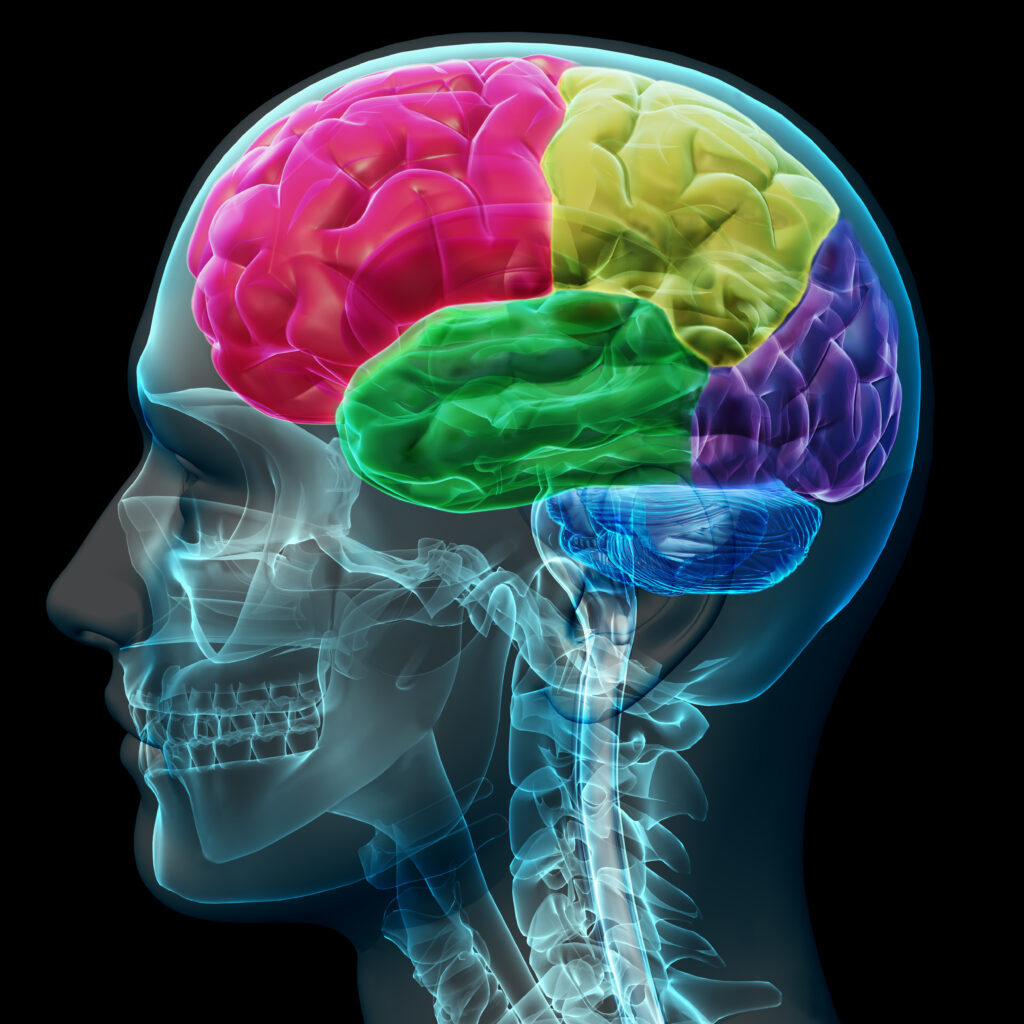
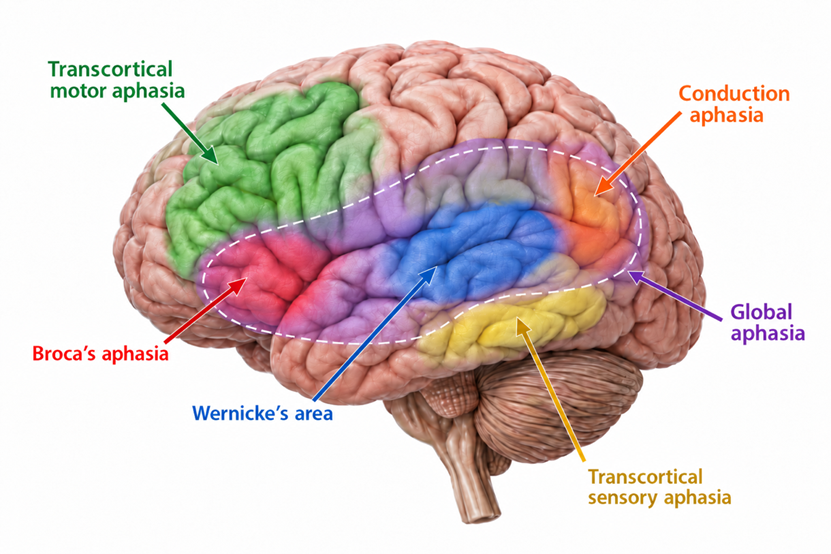
The conventional classification of aphasia distinguishes between fluent and non-fluent aphasias, based on prosody (speech rhythm), grammatical structure, and linguistic production (Baker et al., 2008). Although this classification provides a useful framework for professionals to evaluate aphasia, clinical practice often varies significantly. Individuals frequently exhibit features of both categories, which has led to the description of specific subtypes, including global, anomic, transcortical sensory, transcortical motor, and conduction aphasia.
Non-fluent aphasia is characterized by telegraphic or fragmented speech, a slow speech rate, and simplified grammatical structure, frequently with omission of function words such as prepositions and determiners (e.g., “with,” “of”). Although verbal production is effortful (expressive language), comprehension is relatively preserved. Broca’s aphasia is the most widely recognized subtype within this category. Individuals with non-fluent aphasia are often aware of their communication difficulties, which causes anxiety and frustration (Ford, 2023).
In contrast, individuals diagnosed with fluent aphasia can effortlessly emit words and maintain correct grammatical structures, resulting in fluent conversations. However, the content of their speech is often incoherent due to the use of neologisms (e.g., “glop” for “glass”) and semantic paraphasias (e.g., saying “car” for “bicycle”). Wernicke’s aphasia is the most widely recognized subtype within this category. It is characterized by marked impairment in language comprehension and, unlike non-fluent aphasia, by reduced awareness of communication deficits, which further compromises social interaction (Baker et al., 2008).
Towards Integrated Rehabilitation: Speech-Language Pathology and Behavior Analysis
Given the variability and complexity of aphasia, individualized and interdisciplinary assessment and intervention are essential. Traditional speech-language therapy focuses on the diagnosis and intervention of communicative and linguistic difficulties with the aim of restoring language function and improving articulation through praxis, echoic exercises, and the incorporation of augmentative and alternative communication systems (Esch et al., 2010). In addition, speech-language therapy promotes the social integration of the patient, strengthening speech production and comprehension in order to improve the patient’s quality of life and autonomy (Ross & Wertz, 2003). Nevertheless, these interventions may benefit from complementary approaches that enhance acquisition and generalization to natural contexts.
Applied behavior analysis offers a complementary approach to traditional speech-language therapy, contributing procedures grounded in the functional analysis of verbal behavior and systematic data collection (Esch et al., 2023). Skinner’s (1957) analysis of verbal behavior conceptualizes language as operant behavior controlled by environmental variables. Skinner also suggested that verbal operants differ in how vulnerable they are to loss: operants that depend on simpler repertoires, such as echoic and textual behavior, tend to persist longer than tacts and intraverbals, and grammatical and autoclitic behavior may be the most fragile. Baker (2025) recently revisited this framework to show that language changes in later life are neither universal nor inevitable and that they can be addressed by arranging the environment and teaching new verbal relations. For aphasia, the clinical implication is direct: preserved echoic and textual repertoires can serve as a starting point from which stimulus control is transferred to tacts, mands, and intraverbals. Accordingly, behavior-analytic interventions for aphasia begin with a functional assessment of communicative repertoires, identifying the environmental variables that control (or fail to control) verbal responding. This approach informs the design of individualized interventions aimed at establishing effective functional communication.
A central component of behavior-analytic aphasia rehabilitation is the re-establishment of verbal operants. When an individual presents with anomia (i.e., difficulty retrieving words, particularly when naming objects, actions, or people) or other word-retrieval difficulties, functional assessment identifies the conditions under which these difficulties occur, aiming to reestablish functional responses or establish alternative responses through repeated learning opportunities. Behavior analysts manipulate motivating operations (e.g., arranging situations in which an item or a piece of information is needed to complete a meaningful activity, so that asking for it becomes valuable), implement transfer-of-stimulus-control trials to promote independent responding, use spaced trials to enhance retention and fluency, and apply differential reinforcement to strengthen accurate verbal responses (Magat et al., 2022). In a transfer trial, the clinician presents an effective prompt, such as an echoic model (“Say cup”), together with the target stimulus (e.g., a picture of a cup) and then gradually fades or delays the prompt until the target stimulus alone evokes the response. Spaced trials distribute these practice opportunities across gradually increasing intervals. For example, Ritchie et al. (2021) used an assessment-based response profile to select treatment targets and prompts for an older adult with aphasia and found that a prompt-delay procedure produced positive treatment outcomes. These procedures have been used to reestablish and strengthen verbal operants, from mands to intraverbals, in adults with acquired brain injury and dementia (Dixon et al., 2011; Magat et al., 2022; Ritchie et al., 2021; Sundberg et al., 1990).
Deciding which operants to target, however, requires an assessment that looks beyond the form of the response. Esch et al. (2023) assessed intraverbal repertoires in 36 adults with aphasia or other acquired brain injury and found that errors tended to increase with the complexity of verbal stimulus control, and that diagnostic labels and lesion location did not predict performance. In practice, this means that a person may be able to repeat or name a word but still fail to use it when answering a question, a pattern that standard diagnostic labels do not reveal. These findings support the use of intraverbal assessment to guide interventions that target the organization and coherence of language in this population (Esch et al., 2023; Sundberg et al., 1990).
A key component of any behavior-analytic intervention for aphasia is the generalization and maintenance of verbal behavior across communication partners and social contexts. This requires collaboration within the individual’s multidisciplinary care team, including speech-language pathologists, behavior analysts, and other health professionals, to arrange and reinforce opportunities for functional communication in daily life (Pinter & Brainin, 2012). For example, after a stroke, a speech-language pathologist may assess oral-motor function, praxis, and comprehension and, together with the person and their family, select a set of functionally relevant words (e.g., the names of relatives, “water,” “help”). The behavior analyst may then design the teaching procedures (e.g., prompt hierarchies, transfer trials, and reinforcement), define how progress will be measured, and train family members and nursing staff to create and reinforce opportunities to use those words during meals, visits, and phone calls. The team reviews the data together and adjusts the targets as the person progresses. Magat et al. (2022) suggest that interdisciplinary work promotes verbal behavior and social participation, thereby reducing the frustration associated with the loss of language following acquired brain injury.
Behavior Analysis and Technology in Aphasia Intervention
Technology offers new ways to deliver the intensive and repeated practice that both speech-language therapy and behavior analysis require. In a large randomized controlled trial, people with chronic post-stroke aphasia who practiced word finding daily with self-managed computerized therapy improved their retrieval of personally relevant words, although these gains did not carry over to conversation (Palmer et al., 2019). These results illustrate the generalization challenge that behavior analysis is well positioned to address: technology can provide multiple learning opportunities, while behavior-analytic procedures can help bring new responses under the control of the people, places, and situations of everyday life.
Another example is the DULCINEA intervention, a film-dubbing language therapy for individuals with post-stroke aphasia (Fuentes et al., 2022). Using dedicated software, the person dubs short scenes from films and television series in which selected words or sentences have been muted, and the difficulty of the task is progressively adapted to the severity of the aphasia. From a behavior-analytic perspective, the intervention arranges several of the conditions described above: (1) the target words are selected with patients and caregivers for their functional value; (2) the audiovisual scene provides a rich context of supplementary prompts (e.g., the actor’s lip movements and the surrounding dialogue); and (3) task demands increase gradually as responding becomes more accurate. A randomized crossover feasibility trial in individuals with chronic non-fluent aphasia showed that the intervention was feasible, with high adherence. Although changes in standardized outcomes did not reach statistical significance in this underpowered sample, 85% of participants reported subjective improvements in their communication (Fuentes et al., 2024). Patients and relatives also described the therapy as acceptable and engaging, which supports its social validity (Fuentes et al., 2024). Future studies could combine tools such as these with single-case experimental designs and systematic measurement of generalization to identify which components of technology-assisted therapy are responsible for change.
Conclusions and Future Directions
Research in the area of aphasia rehabilitation has progressively integrated the principles of verbal behavior into the design of effective and generalizable interventions. In conclusion, language rehabilitation following acquired brain injury requires a comprehensive approach that combines behavior-analytic methodologies for strengthening verbal operants in socially significant contexts with traditional speech-language therapy and the incorporation of technological tools. Because most people with aphasia are older adults, closer collaboration with behavioral gerontology is a natural next step (Baker, 2025).
Interdisciplinary collaboration among behavior analysts, speech-language pathologists, and other health professionals is key to developing individualized, sustainable, and effective interventions. Communication is not a privilege but a fundamental right, and continued research is needed to ensure that evidence-based rehabilitation is available to all individuals with aphasia.
References
American Speech-Language-Hearing Association. (n.d.). Aphasia [Practice portal]. Retrieved November 7, 2026, from https://www.asha.org/Practice-Portal/Clinical-Topics/Aphasia/
Baker, J. C. (2025, February 26). Speaking of age: Verbal behavior in later life. Behavior Analysis Blogs. https://behavioranalysisblogs.abainternational.org/2025/02/26/speaking-of-age-verbal-behavior-in-later-life/
Baker, J. C., LeBlanc, L. A., & Raetz, P. B. (2008). A behavioral conceptualization of aphasia. The Analysis of Verbal Behavior, 24(1), 147–158. https://doi.org/10.1007/BF03393063
Barbera, M. L., & Rasmussen, T. (2007). The verbal behavior approach: How to teach children with autism and related disorders. Jessica Kingsley Publishers.
Becker, A. M., & Baltazar, M. (2022). Behavior analysis and aphasia: A current appraisal and suggestions for the future. Behavioral Interventions, 37(1), 170–183. https://doi.org/10.1002/bin.1848
Bueno-Guerra, N., Provencio, M., Tarifa-Rodríguez, A., Navarro, A., Sempere-Iborra, C., Jordi, P., de Celis-Ruiz, E., Alonso de Leciñana, M., Martín-Alonso, M., Rigual, R., Ruiz-Ares, G., Rodríguez-Pardo, J., Virués-Ortega, J., & Fuentes, B. (2024). Impact of post-stroke aphasia on functional communication, quality of life, perception of health and depression: A case–control study. European Journal of Neurology, 31(4), Article e16184. https://doi.org/10.1111/ene.16184
Dixon, M. R., Baker, J. C., & Sadowski, K. A. (2011). Applying Skinner’s analysis of verbal behavior to persons with dementia. Behavior Therapy, 42(1), 120–126. https://doi.org/10.1016/j.beth.2010.05.002
Esch, B. E., LaLonde, K. B., & Esch, J. W. (2010). Speech and language assessment: A verbal behavior analysis. The Journal of Speech-Language Pathology and Applied Behavior Analysis, 5(2), 166–191. https://doi.org/10.1037/h0100270
Esch, B. E., Lindblad, T. L., Clark, B., & Ali, Z. (2023). Intraverbal assessment for persons with aphasia or other acquired brain injury. The Analysis of Verbal Behavior, 39(1), 30–59. https://doi.org/10.1007/s40616-022-00180-x
Fuentes, B., de la Fuente-Gómez, L., Sempere-Iborra, C., Delgado-Fernández, C., Tarifa-Rodríguez, A., Alonso de Leciñana, M., de Celis-Ruiz, E., Gutiérrez-Zúñiga, R., López-Tàppero, J., Martín Alonso, M., Pastor-Yborra, S., Rigual, R., Ruiz-Ares, G., Rodríguez-Pardo, J., Virués-Ortega, J., Borobia, A. M., Blanco, P., & Bueno-Guerra, N. (2022). DUbbing language-therapy CINEma-based in aphasia post-stroke (DULCINEA): Study protocol for a randomized crossover pilot trial. Trials, 23(1), Article 21. https://doi.org/10.1186/s13063-021-05956-5
Fuentes, B., Jordi-Perea, P., Sempere-Iborra, C., Tarifa-Rodríguez, A., de Celis-Ruiz, E., Martín Alonso, M., Ruiz-Ares, G., Rigual, R., Rodríguez-Pardo, J., Alonso-López, E., Alonso de Leciñana, M., Virués-Ortega, J., Borobia, A. M., Jiménez-González, M., Martínez-Balaguer, M., Blanco, P., & Bueno, N. (2024). Dubbing language-therapy CINEma-based in aphasia post-stroke (DULCINEA): A feasibility randomized crossover controlled trial. Digital Health, 10, Article 20552076241288311. https://doi.org/10.1177/20552076241288311
Magat, K. A., Heinicke, M. R., & Buckley, D. L. (2022). The rehabilitation of verbal operants following acquired brain injury. Behavioral Interventions, 37(1), 184–202. https://doi.org/10.1002/bin.1785
OpenAI. (2026). ChatGPT [Large language model]. https://chatgpt.com/
Palmer, R., Dimairo, M., Cooper, C., Enderby, P., Brady, M., Bowen, A., Latimer, N., Julious, S., Cross, E., Alshreef, A., Harrison, M., Bradley, E., Witts, H., & Chater, T. (2019). Self-managed, computerised speech and language therapy for patients with chronic aphasia post-stroke compared with usual care or attention control (Big CACTUS): A multicentre, single-blinded, randomised controlled trial. The Lancet Neurology, 18(9), 821–833. https://doi.org/10.1016/S1474-4422(19)30192-9
Pinter, D., & Brainin, M. (2012). Stroke and rehabilitation: An update. Journal of Rehabilitation Medicine, 44(4), 279–286. https://doi.org/10.2340/16501977-0940
Ritchie, H., Reuter-Yuill, L. M., Perez, A., & Baker, J. C. (2021). Assessment-informed intervention for aphasia in an older adult: Transfer of stimulus control procedure considerations. The Analysis of Verbal Behavior, 37(2), 226–236. https://doi.org/10.1007/s40616-021-00153-6
Ross, K. B., & Wertz, R. T. (2003). Quality of life in stroke patients with aphasia. Stroke, 34(4), 987–992. https://doi.org/10.1161/01.STR.0000062342.36324.6F
Skinner, B. F. (1957). Verbal behavior. Appleton-Century-Crofts. https://doi.org/10.1037/11256-000
Sundberg, M. L. (2008). VB-MAPP: Verbal Behavior Milestones Assessment and Placement Program. AVB Press.
Sundberg, M. L., San Juan, B., Dawdy, M., & Argüelles, M. (1990). The acquisition of tacts, mands, and intraverbals by individuals with traumatic brain injury. The Analysis of Verbal Behavior, 8, 83–99. https://doi.org/10.1007/BF03392850
World Stroke Organization. (2022). Global stroke fact sheet 2022. https://www.world-stroke.org/assets/downloads/WSO_Global_Stroke_Fact_Sheet.pdf