
Dear reader,
Dermot and I hope you have been enjoying the blog series to this point in our tenure, and hope you have not missed us too much these last few months in our absence. As you probably know by now, for our time with the series, we have sought to focus on and develop a theme of cooperation and collaboration within the behavior-analytic study of human language and cognition. Toward this end, we have been inviting people in the field to tell their research stories. We have had some incredible posts so far; from senior, heavy hitters to emerging leaders at earlier points in their careers, all of whom have made and are making incredible contributions to the behavior-analytic study of symbolic language and thought. We also have an exciting line up of people who have agreed to contribute over the next couple of months, so make sure to stay tuned! This month, however, to keep you going while you wait, I thought we would take you through a bit of my (Colin) story. As an Irish person, I find it rather difficult to talk about myself in any way other than self-deprecation (so bear with me!), but us Irish do like storytelling more generally, so let’s give it a go.

Serendipity is an unplanned and fortunate discovery. Indeed, it is arguably a common occurrence throughout the history of scientific discovery, and a theme that has regularly frequented my conversations with one of my mentors, Julio de Rose (click here for Julio’s wonderful blog post for this series). Well, deciding to apply to study psychology ended up being quite serendipitous for me, evidenced at least in part by the fact that I am writing this blog and looking after (along with Dermot) an Association for Behavior Analysis International (ABAI) blog series since 2021. Serendipity, then, might appropriately describe the fact that I happened to apply to study psychology at the National University of Ireland, Maynooth, where Dermot Barnes-Holmes had founded the psychology department, and where Yvonne Barnes-Holmes was also an active contributor. Little did I know that these two individuals would go on to shape not only my academic career and views, but many aspects of my adult life.
I first encountered Dermot in the second year of my degree: module PS201 – Learning, Language and Cognition. Finally, something that felt, what I now know to describe as, behavioral and naturalistic. No tentative appeal to latent constructs, mental structures or physiology for absolute explanations or causes, no fairies inside operating the machine, but rather the interaction of the responding organism and the environment to explain behavior. I distinctly remember one particularly impactful class in which Dermot described a study where depressed individuals would in some contexts continue behaving in a certain way even though doing so lost them money in an experiment (McAuliffe et al., 2014). They would persist despite negative consequences. This fascinated me: people would persist with the same pattern, following the same rule, even though it clearly wasn’t working. Why? And what’s more, nonhuman animals don’t seem to do this — change the task contingencies, and their behavior typically changes with it. So what was it about human learning that contributed to this issue? Perhaps also serendipitously, this general topic was a research line included in the Odysseus research grant that Dermot would be awarded a few years later, and would form the basis of my doctoral work.

I had also been impacted quite dramatically by Yvonne Barnes-Holmes by that point (click here for a great blog by Yvonne about her own story). She taught me developmental psychology in first year, and in my final year “abnormal” psychology and an elective module entitled Re-evaluating the Biomedical Model. The content of the latter two modules very much involved critiquing the idea that suffering was “abnormal”, arguing rather that it constituted perfectly understandable behavioral patterns within complex current and historical contexts, a sentiment beautifully summed up in the title of a recent paper by another hero of mine, Dr. Joanna Moncrief: Difficult Lives Explain Depression Better Than Broken Brains (Moncrief et al., 2024). Along with Dermot’s Learning module, exposure to these topics by these two behavioral powerhouses would form the basis of what I hold to be the case in approaching human behavior and psychological suffering to this day. I often wonder where I would be now had I enrolled in psychology at another university, without their intellectual and personal influence. My wonderful mother would likely say that “everything happens for a reason”, which I guess I would translate as: all we have is now, and it necessarily could not be any other way given the history that led us here.
In any case, I was serendipitously exposed early in my training to relational frame theory (RFT; Hayes et al., 2001) as an attempt at a “grand theory” of human language and cognition (as well as alternative approaches, both behavioral and otherwise). I was introduced to these issues not as fact but as important aspects of the field to critically consider in developing my own standpoint. And I know this is not always the case depending on where and by whom we are trained. Serendipity, eh? Anyway, I finished my bachelor’s degree, went on to complete a master’s under Yvonne’s supervision, and was then taken on by Dermot on the Odysseus research grant at Ghent University in Belgium to do my PhD under both of them, on the topic that had grabbed my attention from so early on: persistent rule-following.
When we started the work, I was stunned to discover that although excessive governance by verbal rules was linked conceptually to some therapeutic treatments of psychological suffering (i.e., acceptance and commitment therapy or ACT; Hayes et al., 1999), little research to that point (circa 2015) had tried to develop an RFT model of this behavior. Two broad areas had long been highlighted in the literature whereby humans and animals seemed to fundamentally differ: (1) rule-governed behavior and (2) symbolic language or derived relations. A lot of work had been conducted in these areas separately, but almost nothing experimentally tried to join them together. Under what circumstances do people continue to follow a symbolic rule even when it’s not working anymore? Under what conditions can that be undermined or reduced to relative degrees?

So that is where we started. And of course, because there was virtually no empirical literature to go off at that point, we just had to take a shot in the dark. First, we needed a metric to assess persistent rule-following. Much of the existing literature had used contingency-switching tasks, so we did the same. Imagine a screen with one image at the top and three comparison images at the bottom. First, choosing the least similar image earns points. Then, without warning, choosing that same image loses points and choosing the most similar one now earns points. How long do you keep choosing the least similar? That was our metric. Following a steep learning curve in programming in PsychoPy, and lots of help from Ciara McEnteggart, we were ready to go with a simple starting question: would participants persist for longer when the rule was presented completely in natural language (“choose the option that is the least similar”) or when they had derived part of that rule themselves (“choose the option that is the ‘BEDA'”, having previously derived that “BEDA” meant “least similar”)? Well, it turned out — no. People given the rule in natural language persisted significantly longer than those who derived part of the rule (and both persisted longer than a control condition with no rules; check out Harte et al., 2017, for more).

In hindsight, this made perfect sense. The direct rule involved language you use every day and have encountered for most of your life. In RFT terms, those words have been derived far more often in your learning history than a new word learned five minutes previously. Of course, this was an explanation we came up with after the fact, so the next step involved checking this by manipulating levels of derivation directly as a variable. I won’t go into all the details of this research programme here because we have a few more stops to make in our trip around the world, but in summary, we found further evidence for the impact of derivation (Harte et al., 2018), evidence for the impact of relational coherence (Harte et al., 2020), and found that these two variables interact to impact upon persistent rule-following (Harte et al., 2021; check out Harte et al., 2020 and Zapparoli et al., 2021, for more details on this research program overall). It was such an exciting time that I will always remember fondly. Dermot, Yvonne, and Ciara instilled in me such an excitement for experimental inquiry, following the data, and the importance of ongoing conceptual development. Indeed, as Dermot always excitedly proclaimed in response to data not being in line with expectation: “the game’s afoot!” — a critical excitement that I continue to carry with me and hope to instil in my own students.
As my PhD was coming to a close, like most people in that position, I had to consider what on earth to do with myself next. Post-doctoral positions in Europe and the UK are hard to come by, especially for behavior-analytic research. Then one day, Dermot arrived into the lab and said that Julio de Rose (who I only knew by reputation at that stage — among many other accolades, Julio published the first experimental transfer of function study!) had mentioned to him at a conference that there were post-doctoral funding opportunities available in Brazil. Ah, serendipity, my old friend, there you are again! Another pair of critical characters in my story, João de Almeida and Carol Coury Silveira, also walked into our lab around then. João at that time was a recipient of the same type of post-doctoral research fellowship Julio had mentioned to Dermot, so I hounded both him and Carol with questions about the fellowship, Brazil, and the university in São Carlos.
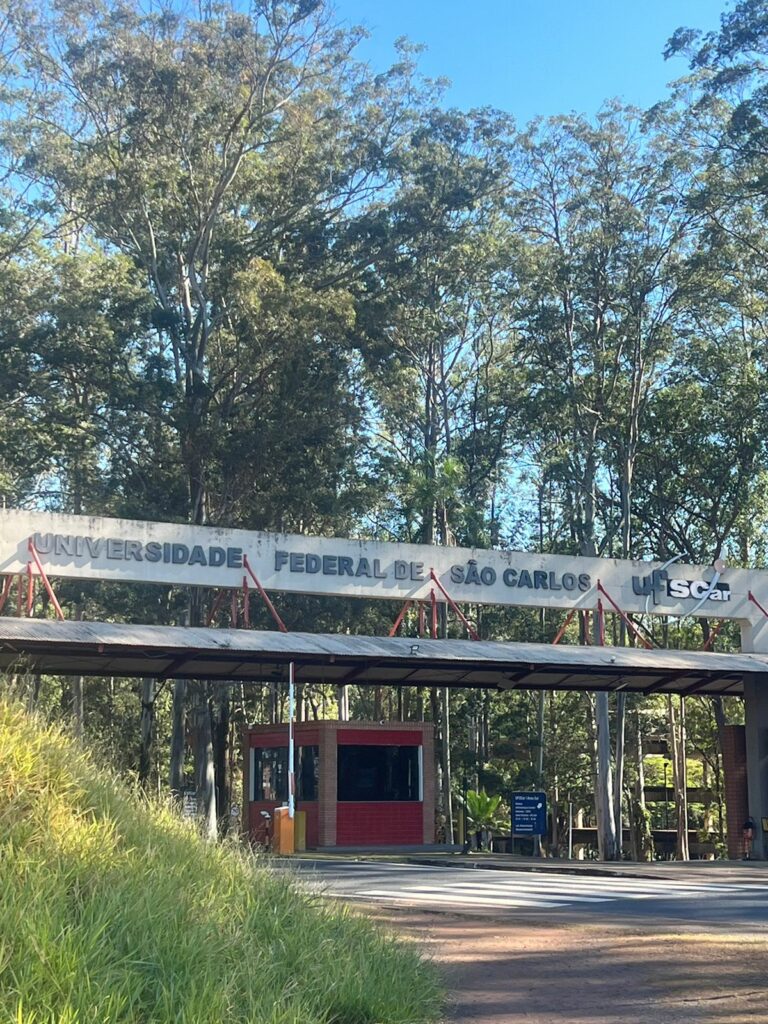
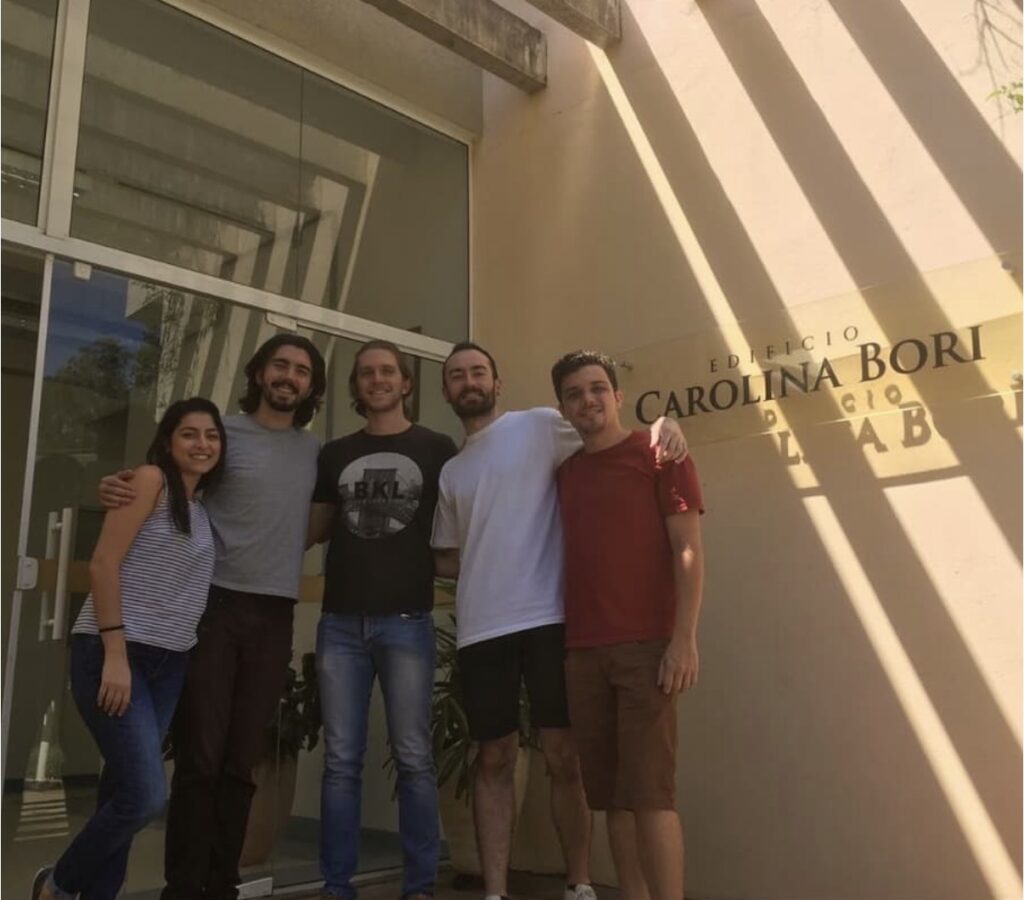
I also serendipitously discovered around that time that Ghent University provided funding opportunities for visiting institutions abroad for either a short or long stay. Given that I only had about a year to finish my PhD, I applied for a short stay, was luckily granted the funds, and went to the Federal University of São Carlos (UFSCar) to work with Julio for a month. There isn’t enough space here to describe my admiration for Julio and his approach to behavior science, nor for João and Carol and the role they have played in this story, but you will get a good gist from the introductions to their own blog contributions for this series (click here for Julio; here for João; and here for Carol). I was also massively impacted by the kindness and generosity of the people I met along the way, from the lab at UFSCar (thinking in particular of Alceu Regaço, Ramon Marin, Heloisa Zapparoli, and Murilo Moreira) to Instituto Par in Sao Paulo (home to the wonderful Roberta Kovac and William Perez), providing the basis of important research collaborations and friendships that continue to this day.
At the time, although the findings from my doctoral work were incredibly informative, the group-based nature of the work always had me wondering about individual patterns of responding. Within groups that had shown overall persistence in rule-following, for example, there were also people that more readily adapted their behavior. Why was that? How could we account for that behavior too? Wouldn’t it be interesting to see if we could get the patterns of individuals under reliable experimental control? The work we designed and conducted while I was in Brazil sought to begin that effort (Harte et al., 2021), as has work since (Alonso-Vega et al., 2024, 2026; Bianchi et al., 2021, 2025), but we still have an excitingly long way yet to go, and I am eager to see where they lead.
Toward the end of my time in São Carlos, Julio suggested that I apply for a post-doctoral fellowship with São Paulo Research Foundation (FAPESP), and so I did, this time focusing on experimental analyses of individual participants rather than groups, and on behavioral dynamics that may link to clinical intervention (see Harte et al., 2023, for an overview). I couldn’t believe it when I got the email telling me the application was successful, but just before it was time to move, the COVID-19 pandemic struck. Before I knew it, I had gone from Ireland to Belgium to Brazil, back to Belgium, and instead of going back to Brazil, was back in Ireland living at home. I was lucky during this time to get a job at the National College of Ireland (NCI) in Dublin lecturing in psychology for a year, and although primarily online, I learned a lot from my time there and from wonderful colleagues and friends such as Drs Michelle Kelly and Conor Nolan. This period also allowed for some intense writing with Dermot, the products of which were pieces I am particularly proud of, including a summary of the Ghent research programme (Barnes-Holmes & Harte, 2022) and a position piece on rules in which we argue for a more technically precise way forward in this important research area (Harte & Barnes-Holmes, 2022). It also provided me with time with my family that in hindsight I will treasure forever, especially now that I live so far from home.

After an unexpected year locked down in Ireland, I was eager to begin the new leg of my research journey in Brazil. A lectureship had also come up in Ireland not long before I was set to leave, and I was faced with a decision: apply for a job with financial security but a lot of teaching, or take the fellowship in Brazil with less long-term certainty but get to do the research that got me excited and out of bed in the morning. Dermot’s ever-present advice to “follow your bliss” rang loud in my ears, as did my Dad’s line that “the island (i.e., Ireland) isn’t going anywhere”, and I moved to the other side of the world. I honestly could not be happier with having made that decision. The work on persistent rule-following has continued, as well as other lines of research, alongside new colleagues and friends. For example, we have been exploring the extent to which studying the dynamics of relational responding on the implicit relational assessment procedure (IRAP) can yield individual participant prediction-and-influence, and how the patterns observed here may help develop analyses of behavioral processes relevant to psychological suffering and intervention. So far, we have found that manipulating variables such as relational coherence, levels of derivation, and stimulus orienting and evoking properties seems to move these patterns in interesting and informative ways (see Harte, 2024, for an overview). We have also started exploring how multiple exposures to the IRAP, extended across weeks and months, might help refine analyses of responding in individual participants (click here for a blog by Breanna Lee who is spearheading this exciting new frontier as part of her PhD, with some help from Mariana Farias de Cunha). And more recently we have begun to apply many of these findings to developing analyses of political polarization, a project for which I recently received funding support from FAPESP to pursue as part of their Generation Project research call (https://fapesp.br/17913/fapesp-anuncia-resultado-do-edital-2024-do-projeto-geracao).
Grappling with the findings of this research has had many implications and raised exciting possibilities for exploring the variables at play in human symbolic language and thought. Indeed, such explorations have pushed us closer to the interbehavioral field construction (see Barnes-Holmes et al., 2026, and Harte & Barnes-Holmes, 2024), as laid out by J. R. Kantor, and in particular as expressed in the work of Linda Hayes and Mitch Fryling (check out Hayes & Fryling, 2023, for a fantastic overview of the Kantorian approach to psychology). Other exciting advances have been seen in the birth of Process-Based Behavior Therapy (PBBT®), developed by Yvonne and Ciara and grounded firmly in advances in RFT (see Barnes-Holmes & McEnteggart, 2024, for a fantastic introduction). Although very much at the beginning of its own journey, I have never seen a treatment model quite like PBBT, both in ambition and ability.
Where will this work lead us? I haven’t a clue. But the game is well and truly afoot, and I am excited to find out. Dermot, Yvonne, Ciara, and now Julio too, have always modelled and instilled in me the importance of following the data and adapting with it. Sometimes this will involve minor adaptations to an idea, other times an entire rework, and indeed sometimes a complete paradigm shift. This can seem scary to some. But after all, is it not important that the science moves forward? Would it not be more worrying if nothing substantial were to change? Science is never done, and I would advise giving a wide berth to anyone who ever tries to convince you otherwise.

I have learned so much in my serendipitous journey around the world so far; from all the people who have mentored and shaped my behavior as an analyst, to the exciting conceptual and empirical developments that have characterized this period. At this point, although I don’t know where in the world I will be in the years to come, for now my home is Brazil. If you told me when I was sitting in Ghent in 2018 writing my application for a short stay at UFSCar, that 8 years later I would be a professor on the post-graduate programme of Psychology at that same institution, I would not have believed you. And although I miss my family and friends in Ireland terribly at times, I could not think of anywhere I would rather be right now or anything else I would rather be doing.
It always struck me as amazing just how much behavior-analytic work is conducted, funded, and valued in Brazil. Such a reality has been made possible in no small part by the efforts of Julio, Deisy de Souza, their mentor Carolina Bori, and of course many others. Through their dedication, the rich legacy of behavior analysis that characterizes the country remains strong (Fred Keller’s autobiography is a great place to find some of these incredible details). The behavior scientists in Brazil are a force to be reckoned with, as well as being some of the kindest and most open people I have ever met. Those on the Irish scene are not to be laughed at either, with a rich legacy starting with Dermot’s own doctoral co-supervisor, Julian Leslie (Julian wrote a great piece that tracks some of this genealogy here for anyone interested). Indeed, in many ways I find the Brazilians and us Irish to be kindred spirits.
So, I have serendipitously seemed to always find myself in the right place at the right time over the years, all important parts of the evolution of this very moment writing this very sentence. From Ireland to Belgium and Brazil. Where this will lead is anyone’s guess, but I am certainly excited to find out.
References
Alonso-Vega, J., Harte, C., & Barnes-Holmes, D. (2024). Analyses of relational coherence and rule following: Consistent liars are preferred over occasional truth tellers. Journal of the Experimental Analysis of Behavior, 121(3), 281–293. https://doi.org/10.1002/jeab.907
Alonso-Vega, J., Harte, C., Masserud, S., & Barnes-Holmes, D. (2026). Relational coherence, rule-following and speaker preference: Punishment and extinction as operations are similar, but not for everyone. The Psychological Record.Advanced Online Publication. https://doi.org/10.1007/s40732-025-00668-7
Barnes-Holmes, D. & Harte, C. (2022). Relational frame theory 20 years on: The Odysseus voyage and beyond. Journal of the Experimental Analysis of Behaviour, 117(2), 240-266. https://doi.org/10.1002/jeab.733
Barnes-Holmes, D., Hayes, L.J., Harte, C., & Fryling, M.J. (2026). Reconstructing RFT through the lens of the Interbehavioral field: What is a relational frame anyway? Perspectives on Behavior Science, 49, 75–98. https://doi.org/10.1007/s40614-025-00485-x
Barnes-Holmes, Y., & McEnteggart, C. (2024). Process-Based Behavior Therapy (PBBT): Where relational frame theory meets clinical practice. The Psychological Record, 74(4), 573–589. https://doi.org/10.1007/s40732-024-00615-y
Bianchi, P. H., Perez, W. F., Harte, C., & Barnes-Holmes, D. (2021). Effects of coherence on speaker preference and rule-following. Perspectivas Em Análise Do Comportamento, 12(1), 214–227. https://doi.org/10.18761/PAC.2021.v12.RFT.07
Bianchi, P.H., Perez, W.F., Harte, C., Barnes-Holmes, D., & Teixeira e Silva, A. (2025). Relational coherence, speaker preference, and rule-following: A replication and extension of Bianchi et al. (2021). The Psychological Record, 75, 41-55. https://doi.org/10.1007/s40732-024-00628-7
Harte, C. (2024). A technical analysis of “valence” and “semantics” towards understanding a core process in human psychological suffering. In N. Costa, L. D. F. Kirchner, & A. R. Fonseca-Junior (Eds.), Comportamento em Foco (vol. 16, pp. 162–178). ABPMC.
Harte, C., & Barnes-Holmes, D. (2024). Recent developments in RFT encourage interbehavioral field-based views of human language and cognition: A preliminary analysis. Perspectives on Behavior Science, 47(3), 675–690. https://doi.org/10.1007/s40614-024-00407-3
Harte, C. & Barnes-Holmes, D. (2022). The status of rule-governed behaviour as pliance, tracking and augmenting within relational frame theory: Middle-level rather than technical terms. The Psychological Record, 72, 145-158. https://doi.org/10.1007/s40732-021-00458-x
Harte, C., Barnes-Holmes, D., Barnes-Holmes, Y., & Kissi, A. (2020). The Study of Rule-Governed Behavior and Derived Stimulus Relations: Bridging the Gap. Perspectives on Behavior Science, 43(2), 361–385. https://doi.org/10.1007/s40614-020-00256-w
Harte, C., Barnes-Holmes, D., Barnes-Holmes, Y., & McEnteggart, C. (2021). Exploring the impact of coherence (through the presence versus absence of feedback) and levels of derivation on persistent rule-following. Learning and Behavior, 49, 222-239. https://doi.org/10.3758/s13420-020-00438-1
Harte, C., Barnes-Holmes, D., Barnes-Holmes, Y., & McEnteggart, C. (2018). The impact of high versus low levels of derivation for mutually and combinatorially entailed relations on persistent rule-following. Behavioural Processes, 157, 36- 46. https://doi.org/10.1016/j.beproc.2018.08.005
Harte, C., Barnes-Holmes, Y., Barnes-Holmes, D., & McEnteggart, C. (2017). Persistent rule-following in the face of reversed reinforcement contingencies: The differential impact of direct versus derived rules. Behavior Modification, 41(6), 743–763. https://doi.org/10.1177/01454455177158
Harte, C., Barnes-Holmes, D., Barnes-Holmes, Y., McEnteggart, C., Gys, J., Hassler, C. (2020). Exploring the potential impact of relational coherence on persistent rule-following: The first study. Learning and Behavior, 48, 373-391. https://doi.org/10.3758/s13420-019-00399-0
Harte, C., Barnes-Holmes, D., de Rose, J.C., Perez, W.F., & de Almeida, J.H. (2023). Grappling with the complexities of behavioral processes in human psychological suffering: Some potential insights from Relational Frame Theory. Perspectives on Behavior Science, 46, 237-259. https://doi.org/10.1007/s40614-022-00363-w
Harte, C., Barnes-Holmes, D., Moreia, M., de Almeida, J.H., Passarelli, D., & de Rose, J.C. (2021). Exploring a Training IRAP as a single participant context for analyzing reversed derived relations and persistent rule-following. Journal of the Experimental Analysis of Behavior, 115(2), 460-480. https://doi.org/10.1002/jeab.671
Hayes, L.J. & Fryling, M.J. (2023). Interbehaviorism: A comprehensive guide to the foundations of Kantor’s theory and its applications for modern behavior analysis. Context Press.
Hayes, S. C., Barnes-Holmes, D, & Roche, B. (2001). Relational frame theory: A post-Skinnerian account of human language and cognition. Plenum
Hayes, S. C., Strosahl, K. D., & Wilson, K. G. (1999). Acceptance and commitment therapy: An experiential approach to behavior change. Guilford Press.
Keller, F. S. (2009). At my own pace: The autobiography of Fred S. Keller. (J. S. Bailey, M. R. Burch, A. C. Catania & J. Michael, Eds.). Sloan Publishing.
McAuliffe, D., Hughes, S., & Barnes-Holmes, D. (2014). The dark-side of rule governed behavior: An experimental analysis of problematic rule-following in an adolescent population with depressive symptomatology. Behavior Modification, 38(4), 587–613. https://doi.org/10.1177/0145445514521630
Moncrieff, J., Cooper, R. E., Stockmann, T., Amendola, S., Hengartner, M. P., & Horowitz, M. A. (2024). Difficult lives explain depression better than broken brains. Molecular Psychiatry, 29(1), 206–209. https://doi.org/10.1038/s41380-024-02462-3
Zapparoli, H.R., Marin, R., & Harte, C. (2021). Rule-governed behavior: An ongoing RFT-based operant analysis. Perspectivas em Análise do Comportamento, 12(1), 197-213. https://doi.org/10.18761/PAC.2021.v12.RFT.09