
Guest Blog by Dave Palmer
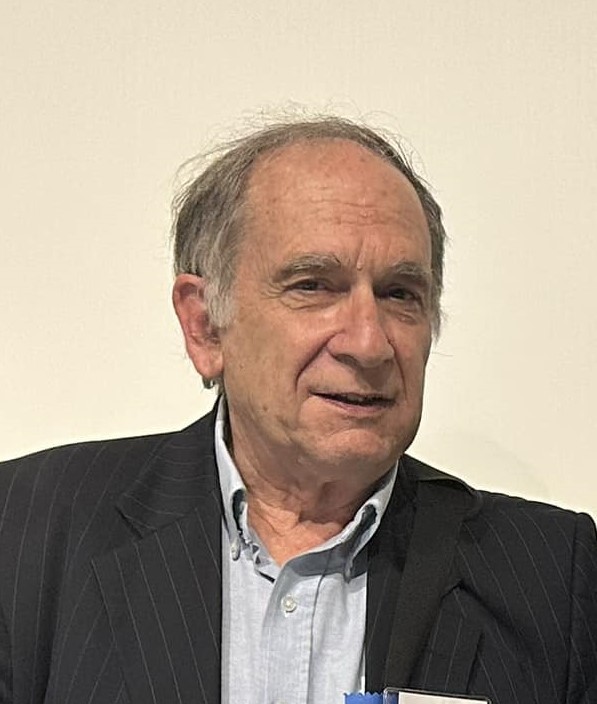
Dave Palmer studied interresponse times and conditioned reinforcement in pigeons under John Donahoe in the early 1980s. Upon graduation, he took a job teaching statistics and behavior analysis at Smith College, where he remained until retirement. He spends most of his time attempting to extend Skinner’s interpretive accounts of human behavior, particularly in the domains of verbal behavior, memory, problem solving, and private events. Together with Donahoe, he authored the text, Learning and Complex Behavior, which attempts to offer a comprehensive biobehavioral account of such phenomena. He still thinks Skinner was right about nearly everything.
Prosody can be thought of as the music of speech—the modulation of its cadence, pitch, volume, stress, pauses, and rate. All vocal verbal behavior has these properties, whether it is standard speech or not. In most of our scholarly work, we tend to represent vocal responses by alphabetical transcriptions: A vocal mand might be transcribed as Milk, please, and a tact as Red truck. Such transcriptions are a great convenience to both the researcher and reader, but text obscures the many normal functions of prosody. Of course, prosody is a subject matter in its own right, and speech and language pathologists often address deviations from normative prosody in their therapeutic work. But behavior analysts should not ignore the many functions of prosody in our attempts to understand speech outside a therapeutic setting.
For present purposes, let us stipulate that prosody is a feature of verbal behavior, so we set aside music or aesthetic rhythms that have no verbal content. In borderline cases, prosody itself can serve a loose verbal function: A young child might babble into a toy telephone with characteristic pauses and inflections in a convincing imitation of adult behavior. A comparable example was recounted by the Nobel laureate, Richard Feyman: When a boy, bicycling through the Italian quarter of New York City, he learned to shout insults to rude motorists in fake Italian—a language he did not speak—to the whistles and cheers of passers-by:
“…oREzze caBONca MIche!…After all, when they hear the intonation, they recognize it immediately as Italian—maybe it’s Milano instead of Romano—What the hell, he’s an Italian! So it’s just great.”1
Shakespeare anticipated Feynman by more than three centuries; he routinely exploited prosody in his poetry and songs by blending words and nonsense in delightful rhythmic and rhyming patterns. In this verse of a song from As You Like It, it would be pointless to try to decide where verbal behavior begins and ends, but of prosody there is plenty:
It was a lover and his lass,
With a hey, and a ho, and a hey nonino,
That o’er the green cornfield did pass,
In springtime, the only pretty ring time,
When birds do sing, hey ding a ding, ding;
Sweet lovers love the spring.
But the point of this essay is that prosody is an integral part of all verbal behavior, not just exceptional cases. Let’s consider some of its verbal functions. (Recall that the examples are of speech, not text. Punctuation is used here only to imply the prosody)
1) Prosody betrays affect
Happy, sad, bored, sarcastic, whimsical, or angry speech all have distinctive intonations—that is, variations in pitch, intensity, tone, and duration, modulated within and between words. The validity of these variables can be captured by listening to various relevant texts read in a deliberately-paced monotone and then listening to the same texts read by a skilled reader, or actor. The former is unendurable, the latter evocative, although the textual stimuli would be identical.
2) Prosody differentiates words that happen to have identical textual representations:
con’- duct vs. con – duct’
ab’ – stract vs. ab – stract’
ad’ – dress vs. ad – dress’
en’ – trance vs. en – trance’
In such cases, the prosody is not an optional accent but a defining feature of the response itself.
3) Prosody can provide autoclitic contrast. Notice the difference in the apparent controlling variables in each of the following sentences:
The doctor ordered you to stop eating peanuts.
The doctor ordered you to stop eating peanuts.
The doctor ordered you to stop eating peanuts.
The doctor ordered you to stop eating peanuts.
The doctor ordered you to stop eating peanuts.
The doctor ordered you to stop eating peanuts.
In such cases, the differential stress is a non-lexical autoclitic.
4) Prosody can alter the function of an utterance.
Steve drove to Boston?
Steve drove to Boston.
Steve drove to Boston!
5) Prosody marks the boundaries of verbal operants:
a) Separate words vs. compound words:
I live in a green house. vs. I live in a greenhouse.
I bought cream, cheese, and milk. vs. I bought cream cheese and milk.
b) Prosody marks clause boundaries within a sentence. In the following sentence, does the opening clause end after “ate” or after “dog”? A prosodic downturn would provide the answer.
After I ate my neighbor’s dog my neighbor and the police paid me a visit.

c) Sentence boundaries are marked by prosodic cues. Declarative sentences end in distinctive downturns, interrogatives in distinctive upturns.
6) Prosody marks transitions between elements in the filling of autoclitic frames. This is a point that requires considerable discussion:
My previous points have covered well trodden ground, points well known to teachers the world over, but the stimulus control of the interweaving of autoclitic frames and lexical content is unique to a behavioral account. Skinner coined the term autoclitic frame for a matrix of fixed terms, appropriate to a context, that are mingled with variable terms that vary from one circumstance to another. Perhaps the simplest examples of autoclitic frames are prepositional phrases. On the X; underneath the X, in front of the X; between the Xs; etc. The frame on top of the X comes to strength whenever the relationship of superposition is of interest to the listener, and X will vary from one circumstance to another. The speaker’s task is to interweave the frame and the variable term. This is a simple matter in the case of elementary prepositional phrases, since the position of X is relatively invariant.
Many of the more complex autoclitic frames are dominated by verbs, for verbs often entail relationships among multiple variable terms. The verb send, for example, implies a sender, something sent, and a recipient of the thing sent. One such frame would be X sent Y to Z, where X, Y, and Z themselves might be modified with determiners, adjectives, prepositional phrases, or relative clauses. Roughly equivalent alternative frames would be Y was sent by X to Z, and Z was sent Y by X. Although they can be considered synonymous, the frames are likely to come to strength in somewhat different circumstances, depending on what is of primary interest to the listener.
A major task for behavior analysts, and a challenging one, is to show how stimulus control shifts from moment to moment in time as we speak, so that frames, the variable terms in frames, and the epicycles of relative clauses, prepositional phrases, determiners and modifiers get emitted in a fluent, continuous, effective, and often novel stream, with relatively little evidence of deliberate composition, back-tracking, and editing. It is a formidable challenge to be met, if at all, by incremental advances on our part.
A possible incremental advance is to notice that in autoclitic frames, the variable terms are marked by prosodic stress. In the frame X sent the Y to Z, notice where the stresses fall: Keller sent the manuscript to the editor. In the frame, Y was sent to Z by X, we would say, The manuscript was sent to the editor by Keller. To my ear, the substitution of pronouns weakens or eliminates the stress: Keller sent it to the editor, and Keller sent it to him. Pronouns stand in for nouns when they are understood, and there is no need for prosodic stress. That is, the frame has only two, or one, variable term respectively: X sent it to Y, and X sent it to him. Such observations suggest that speakers, without awareness, mark variable terms in autoclitic frames with prosodic stress and that listeners are assisted in the interpretation of such extended utterances. Moreover, both speakers (in their vocal behavior) and listeners (in their reinforcing practices) appear to differentiate between what is already known to both parties and what is new to the listener.
These observations are just the opening wedge of what must surely be a formidable program of scholarship, analysis, and interpretation. Prosody is a conspicuous feature of verbal behavior, but we have just a few punctuation marks to capture its range of functions. Perhaps it is for this reason that behavior analysis has largely neglected it in the past, but it may be necessary to bring it into our empirical and interpretive exercises if we are to make further progress in understanding the full range of verbal phenomena.
1Feyman, R. P. (1985). “Surely You’re Joking Mr. Feynman!” W. W. Norton & Co.