
Written By: Josh Farrell, Emily Lupul, and Heather Beauchamp
Edited by: Dr. Odessa Luna
As behavior analyst trainees, applying, navigating, and controlling the power of being newly educated is a treacherous path, especially in Manitoba, an unregulated province in Canada. Like Australia, we are geographically isolated and have limited Board Certified Behavior Analysts (BCBAs) that can provide supervision (Bayley et al., 2022). Of course, the Behavior Analyst Certification Board (BACB) Ethics Code (hereafter referred to as the Code) serves as our foundation for all responsibilities, principles, and decision-making in the delivery of Applied Behavior Analysis (ABA) services. Blurred boundaries often arise because our scope of competence is still emerging. We know we require supervision. Yet, how are we to navigate our defined role when we are constantly expected to perform beyond our credentials to meet service gaps? Across all three of us, we struggle to abide by the Code when technically we lack the official authority to implement decisions. Often, we are left to rely on our professional judgment in a behavior analyst role. We hope that sharing our three personal stories of working in Manitoba, Canada, will bring attention to this issue for new BCBAs and behavior analyst trainees.
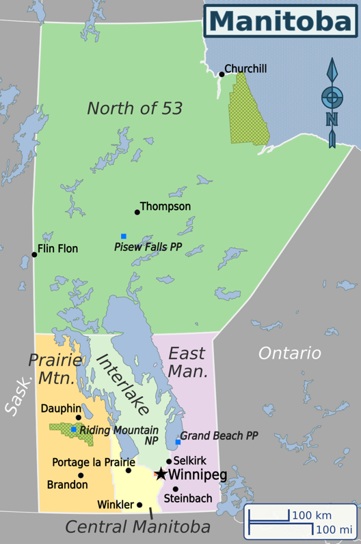
Figure 1
Map of Manitoba showing Wikivoyage travel regions. From Manitoba WV regions map, by Shaundd (2020), Wikimedia Commons (https://commons.wikimedia.org/wiki/File:Manitoba_WV_regions_map.svg)

Licenced under CC BY-SA 4.0.
Personal Experience: Josh
In my previous job, I worked as an Autism Tutor, which is like an RBT role in the United States for 2 years, where my role was primarily to implement the programs the BCBA created. After this experience, I decided I wanted to become a BCBA, so I chose to pursue my master’s in ABA.
Before starting my master’s, I was aware that being an Autism Tutor would not get me supervision hours, so I began looking for a more BCBA-like job in Manitoba. This process proved difficult. Eventually, I was able to find one that did not require me to move to another province or another country. Currently, I’m working as a Graduate Student Clinician. With this job, I have higher-level responsibilities and have begun accruing fieldwork supervision hours. These responsibilities include making programming decisions for my client and training new staff. As such, I have now entered a new position of authority. I am now the one teaching people how to implement my programs, instead of being told how to implement someone else’s programs. This switch made me very nervous, as I was aware that many of my colleagues have been working in the ABA field for many more years than I have.
When I was assigned an Autism Tutor, I was surprised to see it was one of my former supervisors. Although she had worked at the agency for over 10 years, compared to my 2 years of experience, my status as a graduate student meant I was the one giving directions to someone who had once given me directions. This was a dramatic change in our professional relationship.
The new dynamic between the two of us was ambiguous in the beginning, as I was aware she had much more experience assisting in the creation and implementation of interventions than I did. There were times when I questioned whether I should correct her when she was implementing my programs differently from how I explained the steps in the intervention outline. This connects to Code 1.05 of the BACB Ethics Code, because she had more experience than I, which made me question if I was qualified to correct her or if I was stepping outside my scope of competence.
Although it felt awkward to correct someone who had corrected me so many times, I knew I had to do it as we were now in different positions. I had to focus on our current roles and not our past ones. As an emerging BCBA, I wanted to ensure I was acting in the best interest of my client (BACB Code 3.01). I needed to ensure that the interventions were implemented correctly, and I made it a point to say something. I ended up speaking frankly with the Autism Tutor about the switch in positions. I acknowledged her experience in the field, while stating that I will have to fulfill my role expectations. Thankfully, she was receptive to this conversation, and this conversation helped clarify our new professional relationship and responsibilities (BACB Ethics Code 1.04).
After that meeting, I was able to provide corrective feedback, even when I was nervous to do so. When I helped her fix the issue I saw previously, she continued to implement my feedback, and the client continued to improve. I began feeling more confident in my abilities and thus continued to provide feedback when I saw further deviations from the interventions I had created. Code 4.08 of the Code applies here because I was responsible for monitoring the implementation of my programs and providing timely feedback.
Although I second-guessed myself about whether I should provide feedback, I recognized our previous relationship was in the past, and we now have a new relationship. This new arrangement does not mean she cannot provide input. In fact, we have a collaborative arrangement, and she has provided input on the client’s programming on many occasions, which has been a great help to my program development. There have also been times when she has corrected me, and we have fallen back into our old relationship instead of our current one.
As I continue to adjust to this new role, I still have some lingering questions: “How can I give feedback without it sounding demeaning?” “How can I ensure our past professional relationship won’t affect our current one?”, and “How can I build credibility with someone who previously saw me as an employee, while they were a supervisor?” I feel that by posing these questions, I can better identify what I need to be mindful of while navigating new challenges.
Personal Experience: Emily
I’m a Graduate Student Clinician working in Thompson, Manitoba. I work in a region where access to behavior services is extremely limited and we are quite isolated from other communities, as shown in Figure 1 (Shaundd, 2020). Although this is my first year in this role, I am the only behavior clinician in the area, the nearest services are hundreds of kilometers away. This creates unique challenges when issues arise because immediate guidance is not readily available. Often, I’m forced to manage situations to the best of my ability while striving to abide by the BACB Ethics Code.
In my community, I’m viewed as the expert on behavior because I’m pursuing a graduate degree in ABA. Teachers, educational support staff, administrators, and families rely on me to provide recommendations, problem-solve, and make difficult decisions. These situations create tension between my role as a highly sought after professional and the limits of my role as an uncertified student behavior analyst.
Multiple situations have caused me to make decisions without the consultation of my supervisor. Understandably, that is strongly discouraged. However, those situations presented me with the responsibility to prioritize the safety and wellbeing of the client and act quickly. I find myself caught between my professional responsibility and remaining within the boundaries of my current role. For example, I was requested to provide behavioral services to a high-school student who was exhibiting self-injurious behaviors. The school communicated that they were at a loss on how to support this student. Following the intake and the initial observation, it was evident that the student was not engaging in self-injurious behaviors, rather they were having a mental health crisis and engaging in self-harming. The student disclosed to me that they did not feel safe at home, frequently self-harmed, have had frequent thoughts of suicide, and hear voices in their head. Code 1.02 states that I’m legally required to report the student’s disclosure (BACB Ethics Code 1.02) and Code 2.12 states that I’m obligated to address if a behavior is influenced by medical variables (BACB Ethics Code 2.12). Although my supervisor was unavailable, I knew I was required to act ethically and efficiently. I followed the reporting procedure and informed the school staff about the situation, assuming they would take over because this is no longer an ABA concern and out of my scope of competence. However, the staff did not take responsibility or want to be involved in getting the student the appropriate support. After obtaining informed consent, I took the student to the hospital to access proper psychiatric care.
These experiences have reinforced the importance of the BACB Ethics Code. Reliance on the Code has helped guide my decisions to ensure client welfare. Working in this region has shown me that responsibility and authority are not equal measures. Although I am responsible for the welfare of my clients, I do not possess the authority to make most decisions, but there are situations where I’m required to act quickly. There is a difference between understanding and applying the Code. The ability to apply the Code in ambiguous situations or without immediate access to support is crucial.
Personal Experience: Heather
I have worked in the field of disability support for 27 years and have held several positions in a variety of workplaces, including direct support in day programs, Autism Tutor, group home Team Leader, and various long- and short-term respite positions. However, my specific work within ABA, and now graduate school, have only encompassed the last four years of my career. I am relatively new to working with preschoolers while providing early intervention services. Although my previous experiences have provided me with many transferable skills, such as problem solving, non-verbal communication, and strong observational skills; I still do not possess the authority that comes with formal credentials and certification in this field.
Like many of my colleagues at this stage of our careers, I often feel caught between two worlds. We are actively pursuing our master’s degrees in ABA and acquiring a wealth of new knowledge that we are eager to put into practice. At the same time, we remain responsible for working within the guidance and limitations established by our supervising behavior analysts.
For example, in my position as an Autism Tutor, I provide one-to-one support to a child as they prepare to enter elementary school this fall. I have worked 20 hours a week with this child for a substantial period in a rural community near Steinbach, Manitoba. This location is important. The preschool, where most of our time is spent, serves both typically developing children and what they refer to as “inclusion kids” within the same classrooms. These inclusion students require one-to-one support for a variety of reasons, including autism, cerebral palsy, and Down syndrome.
The preschool staff do a fantastic job. That said, for the past two years I have been the only person with formal behavior-analytic and special needs training. The staff are eager to learn and frequently ask questions, yet I have also been reminded that I work within a set of boundaries and can only formally apply my knowledge to my assigned client. (BACB Ethics Code 1.04) I am not permitted to share specific programming details or behavioral support strategies with the staff, as they are not under the supervision of a behavior analyst (BACB Ethics Code 2.03 and 1.03)
Within my organization, the urban Winnipeg classrooms have senior tutors and behavior analysts readily available. Programming questions, behavioral support, and general decision-making can occur on the spot with those who have the authority to make such decisions. In the rural community setting, this is not the case. I am fortunate if I see a Senior Tutor (BCaBA in the United States) once a week for a few hours and a Behavior Analyst every few weeks. Life happens. There have been periods of up to four months without an in-person visit from a Behavior Analyst. Email communication can only go so far, and I am often left using my best judgment to balance the ethics of practicing within my defined role and having a responsibility to provide my client with the best care possible in a timely manner (BACB Ethics Code 2.02).
Navigating communication with off-site supervision has been a delicate dance. I have been instructed to execute the program exactly as written and avoid deviating from it because it was designed for a reason. Yet I have also been praised for making adjustments that better align with my client’s interests and needs. When I have waited for supervisory guidance regarding a problem, the solutions provided have often been ideas that I could have reasonably implemented myself. However, I have been taught to “stay in my lane” and ask the questions rather than assume authority that I do not yet possess.
This creates an ongoing ethical issue. I am not permitted to conduct assessments that could expedite programming decisions, yet I also know that delaying instruction may limit my client’s opportunities for growth. I frequently ask myself: If I can see the next logical teaching steps, is it ethical to wait for formal approval, or is it more ethical to use incidental teaching opportunities to promote learning in the meantime?
The answer is not simple. Ethics in ABA are not solely about following rules; they are also about balancing professional boundaries with our obligation to benefit the client and avoid harm. Working under supervision means recognizing both the limits of our competence and the realities of service delivery. In rural settings, where access to supervision can be limited, these tensions become even more pronounced.
Perhaps the most important lesson I am learning in graduate school is that ethical practice often exists in the grey areas. Knowing when to act, when to wait, and when to advocate for additional support requires humility, professional judgment, and an unwavering commitment to the client’s best interests. Learning ethics without real authority has taught me that “staying in your lane” does not mean stopping our critical thinking; rather, it means learning how to use our knowledge responsibly while respecting the boundaries of our role.
How do we move forward?
We are struggling to find adequate supervision, clients within our scope of competence, and to address service gaps. Manitoba’s geography is a barrier for many clients who could benefit from behavioral services. Additionally, when we obtain clients within our scope of competence, there are very few BCBAs who can provide supervision. Currently, we possess some knowledge in the field of ABA but we lack genuine authority. How are we supposed to expand our experience to support our province without having enough professionals to support us? Let us know in the comments of any strategies you have found helpful in practicing in the “middle.”
AI Statement
Claude (Anthropic) was used to provide line-level grammar edits during the first draft of this blog post. All line edits including which suggestions to accept or reject, were made by Dr. Luna. Heather used ChatGPT to suggest editing options for grammar and clarity. Generative AI was not used.
References
Bayley, K., Trembath, D., & Leif, E. (2022). Supervision for aspiring behaviour analysts in Australia: An exploration of current practices, challenges, and opportunities. Behavior Analysis in Practice, 16(4), 843–859.https://doi.org/10.1007/s40617-022-00739-z
Behavior Analyst Certification Board. (2020). Ethics code for behavior analysts. https://www.bacb.com/wp-content/uploads/2022/01/Ethics-Code-for-Behavior-Analysts-240830-a.pdf
Shaundd. (2020). Manitoba WV regions map [Map]. Wikimedia Commons. https://commons.wikimedia.org/wiki/File:Manitoba_WV_regions_map.svg