
by Taylor Lewis, MS, BCBA
edited by Ka’ala Bajo
If you are a graduate student, two things you have likely already learned are that (1) time is fleeting, and (2) there is much to do. Given this, you may find yourself developing strategies to be as efficient as possible. In the beginning of my training, I often assumed that the most efficient path was to focus as narrowly on my research area as possible. Many students probably feel similar pressure to specialize early. Faced with many constraints in graduate training (e.g., funding, scheduling, degree requirements) along with the pressure to build competitive CVs, many of us respond by narrowing our focus and investing in experiences that align with our primary area of interest.
Especially for applied students, experiences outside of our main clinical focus or research area can feel unnecessary. When time is limited, anything that does not obviously advance thesis or dissertation progress or clinical competence can feel like a distraction.
As an applied researcher in a rather niche area (stimulus control in early reading with children in an elementary school setting), I often believed that the most strategic use of my time was to stay as close as possible to applied research with child participants. After all, why would someone studying sources of stimulus control in early educational contexts need to understand anything about running studies on pigeons’ matching-to-sample performance or class formation in rats? There’s no time!
(Spoiler alert: there was time, and I am better because of it).

I was fortunate to learn relatively early on in my training about the importance of seeking out diverse training experiences. This perspective has been shaped by my experience in a lab and with a mentor that not only values intellectual depth, but also intellectual curiosity and breadth. I have come to see this as not only one of the most beneficial aspects of my training, but also as a major source of enjoyment.
Defining “Diverse Training”
To answer the question of why these experiences are important, I first want to consider what we mean by “diverse training.” The advice to seek out diverse experiences can sometimes sound vague and unrealistic, especially in the context of the time and productivity pressures of graduate school. So, in an attempt to make my number one piece of advice clearer, I would first like to define diverse training:
Diverse training is not (a) trying to do everything, (b) sacrificing progress in your primary area of training (c) collecting experiences purely for the sake of CV building, or (d) seeking to become an expert in every area.
Instead, what I mean by “seek out diverse training experiences” is to do your best to gain exposure to as many different ways of doing behavior analysis as possible. A major goal of my graduate program is to produce radical behaviorists. To become one, it is helpful to expose yourself to behavior analysis in many different contexts. This might mean working with different populations, observing different species, engaging with different methodologies, examining different types of data, asking different questions, or participating in conversations that reflect different perspectives.
In my own experience, I have found that instead of distracting from my main area of focus, these opportunities have made me a better behavior analyst and have placed me in conversations with some incredibly interesting people who have challenged the way I think about behavior.
Entering the Basic Laboratory as an Applied Researcher
Seeking out diverse training experiences can take many forms, and I have been fortunate enough to have had the opportunity to engage in a range of experiences both within and outside of my applied work. To provide a concrete example, I would like to highlight one experience outside of my lab that has been particularly formative: my time dabbling in basic research.
My basic experience not only helped me ask better applied questions but also advanced my commitment to a radical or thoroughgoing approach to behavior.
When I first started telling friends and peers that I, a student whose thesis and dissertation focused on educational interventions, was going to begin working in our rat and pigeon labs, a common response I received was, “Cool…why?” Early on, my response was often that the opportunity presented itself and that I thought it would be a fun and interesting experience. A follow-up question I frequently received was, “Do you think you’ll have time?” To be honest, I was not sure. As a student with an interest in maintaining an active research program and publishing in many areas in the applied realm, I did have concerns that the time spent learning new protocols, working with unfamiliar equipment, and engaging with entirely different research literatures would slow me down.
Sometimes those concerns felt justified. Learning to handle rats and pigeons was uncomfortable. Learning highly complex procedures was uncomfortable. Progress was often slow, and the absence of an immediately obvious applied goal sometimes made it difficult to communicate how any of this would translate to my work.
However, it became clear to me that these conditions associated with discomfort produced rapid learning. I learned so much and was fortunate enough to be surrounded by incredibly intelligent mentors and peers who were willing to answer questions and help me make connections between my applied background and the basic laboratory. I was given the opportunity to consider things like how we might study functional equivalence in rats, or how sample-specific response requirements in pigeons can answer questions about the use of differential observing responses in human discrimination learning.
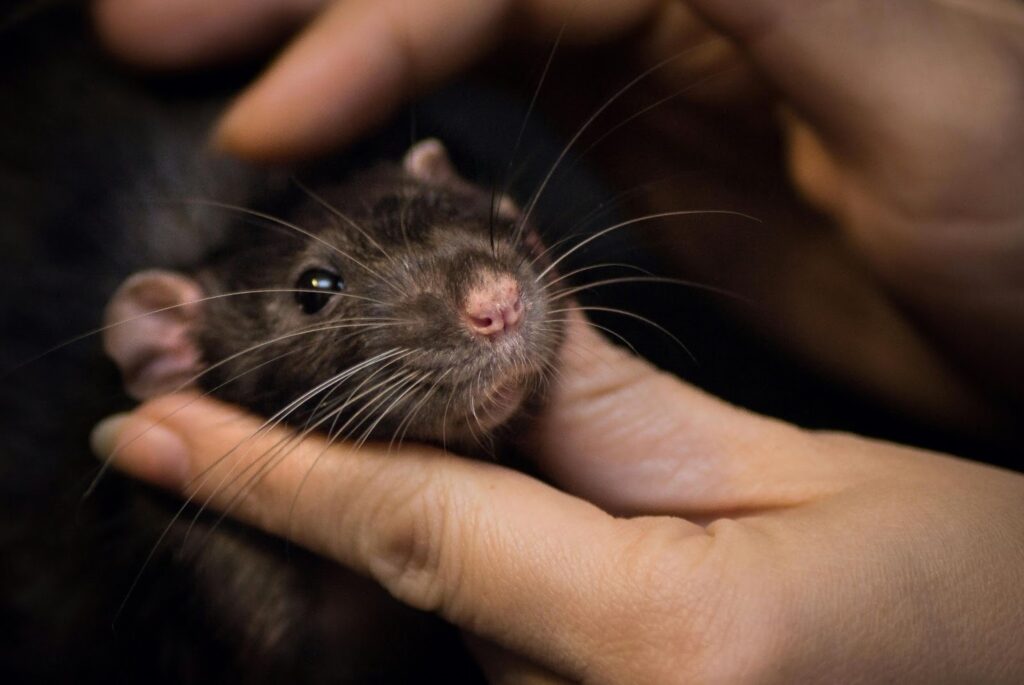
As someone with a strong interest in stimulus control, working with nonhuman subjects also forced me to confront questions that I might have glossed over in my applied work: What exactly is controlling responding? How do we know when behavior has truly come under stimulus control? How can we test for specific stimulus control topographies in nonverbal organisms? What assumptions are we making when we interpret skill acquisition data? My basic experience not only helped me ask better applied questions but also advanced my commitment to a radical or thoroughgoing approach to behavior.
This hands-on experience also allowed me to become more comfortable with procedures common in the experimental analysis of behavior. This, in turn, made me a better consumer of the basic literature. I view this as a sort of “behavioral cusp” that provided me access to a whole new world of information.
Importantly, these translational benefits were only part of what made this experience valuable. The emphasis on experimental control and systematic manipulation in basic research was invigorating. I found that the value of these experiences did not depend solely on their ability to map cleanly onto my primary area of interest. Some of the value of many of my diverse training experiences lies simply in the opportunity to ask and consider questions that are interesting and challenging. Having the freedom to chase these areas of interest is something I will always remember fondly about my time as a graduate student.
But There’s No Time!
To revisit what we already know: time is fleeting, and there is much to do. Your time in graduate school is finite, and perhaps not every opportunity is worth pursuing. Seeking diverse training experiences can feel risky, especially when productivity expectations are high and they may not lead directly to publications, grants, or fieldwork hours.
However, the benefits of diverse training cannot be overstated. Becoming a radical behaviorist not only involves learning about conceptual principles but also demonstrating generalization across contexts. Diverse training experiences play a critical role in shaping that repertoire. So, while time in graduate school is finite, I hope you will recognize that access to certain training experiences is also time-limited and may be far more difficult to pursue once your professional roles become more focused.
So, let’s consider some practical strategies for students interested in seeking out diverse training experiences:
- Start small
Attending lab meetings, classes, or seminars outside of your area or course sequence can be an accessible way to ease into new experiences and build relationships. I have been part of some incredibly interesting conversations simply by joining in on additional research meetings, journal clubs with retirees, or classes outside of my prescribed course schedule.
- Consult with your mentors to identify relevant experiences
Ask trusted mentors about opportunities in areas you are curious about. Mentors can help identify experiences that align with your interests while still supporting your broader training goals and helping you to manage your time effectively.
- Just ask!
In reaching out to inquire about potential opportunities, think about why you want to gain these experiences. Even if you are unsure about possible connections to your work, just being curious about the experience is okay. Communicate your curiosity and your desire for skill development.
- Reflect
In your training experiences, take time to think about what you are learning and how it connects to your goals. Talk with mentors about your experiences and how you are benefitting from those experiences. Given the time constraints, it is important to be intentional.
Making the Most of a Finite Window
When time is limited, we may be tempted to prioritize efficiency and specialize as quickly as possible. However, consider your overarching goal in joining a behavior analysis graduate program. If your goal is to become a radical behaviorist, diverse training experiences can effectively shape this repertoire. By engaging with different populations, species, data, ideas, and methodologies within behavior analysis, I have developed a stronger conceptual foundation and a more critical approach to both research and practice. Graduate training is temporary, but the skills and perspectives developed as part of your training are not. I encourage you not to be discouraged by your limited time, but to view it as a rare opportunity to engage both widely and deeply with behavior analysis while you are in this unique time in your career when exploration is expected.
Taylor Lewis, MS, BCBA

Taylor Lewis is a Ph.D. student in Psychology with a concentration in Applied Behavior Analysis at the University of North Carolina Wilmington. Her research focuses on leveraging stimulus control technologies to refine instructional methods and better support children experiencing learning difficulties. In her free time, she enjoys reading, watching baseball, playing golf, and spending time with her family and senior dog, Hershey.
Keywords/tags: student perspectives, doctoral training, basic, applied